emios GmbH
KF Claw (Wall) Clamp
KF Claw (Wall) Clamp
Couldn't load pickup availability
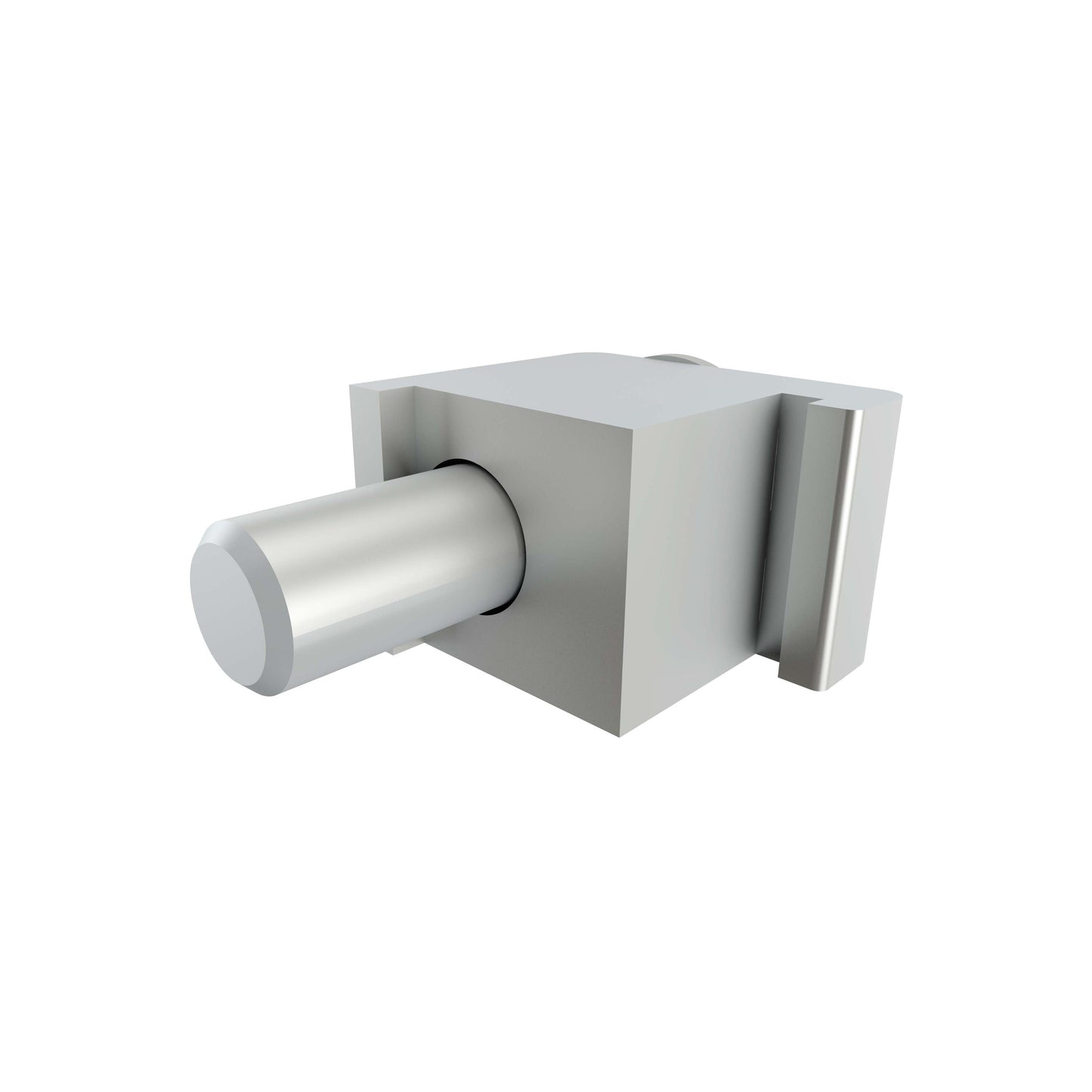
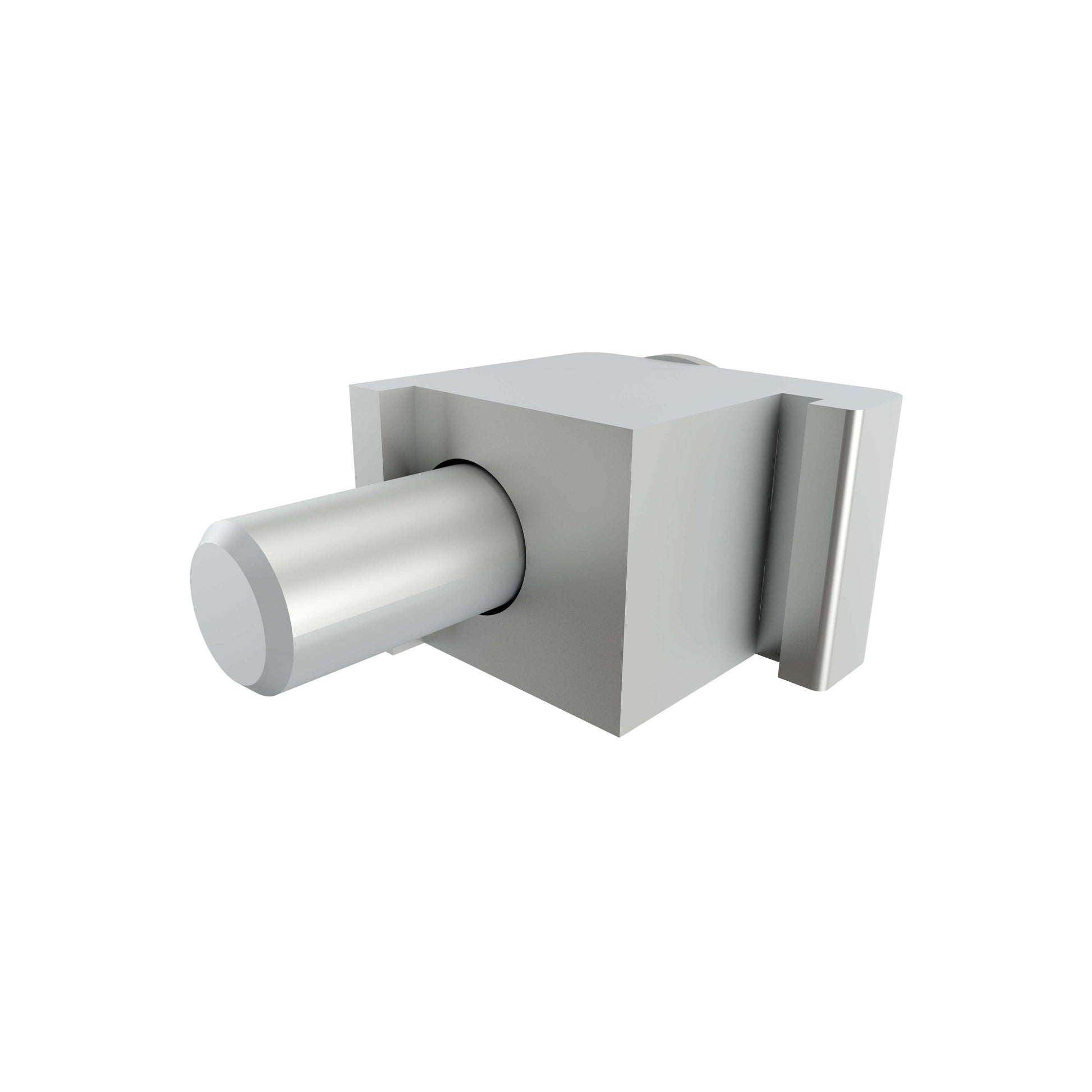
KF Claw (Wall) Clamps provide a compact and reliable solution for securing ISO-KF vacuum flanges directly to flat mounting surfaces, such as vacuum chamber walls, base plates, and vacuum system assemblies.
Unlike conventional KF clamping rings that surround the entire flange circumference, individual claw clamps engage the outer edge of the KF flange and apply mechanical clamping force through a mounting screw. This design allows flanges to be secured directly to a suitable mounting surface without requiring a complete clamping ring.
The compact construction makes claw clamps particularly useful for custom vacuum assemblies, space-constrained installations, and flange connections requiring direct mechanical fastening.
Technical Specifications
Product Type: Individual KF claw (wall) clamp
Flange Connection: ISO-KF (QF / NW)
Configuration: Single-point mechanical flange clamp
Mounting: Screw fastening to a suitable mounting surface
Function: Securing KF flanges against flat mounting surfaces
Manufacturer Article Number: 301205
Applications
Suitable for vacuum chambers, vacuum manifolds, base plates, laboratory vacuum equipment, and custom vacuum assemblies requiring direct mounting of ISO-KF flanges.
Claw clamps are particularly useful for flange installations where conventional KF clamping rings cannot be used or where individual fastening points are preferred.
Installation and Compatibility
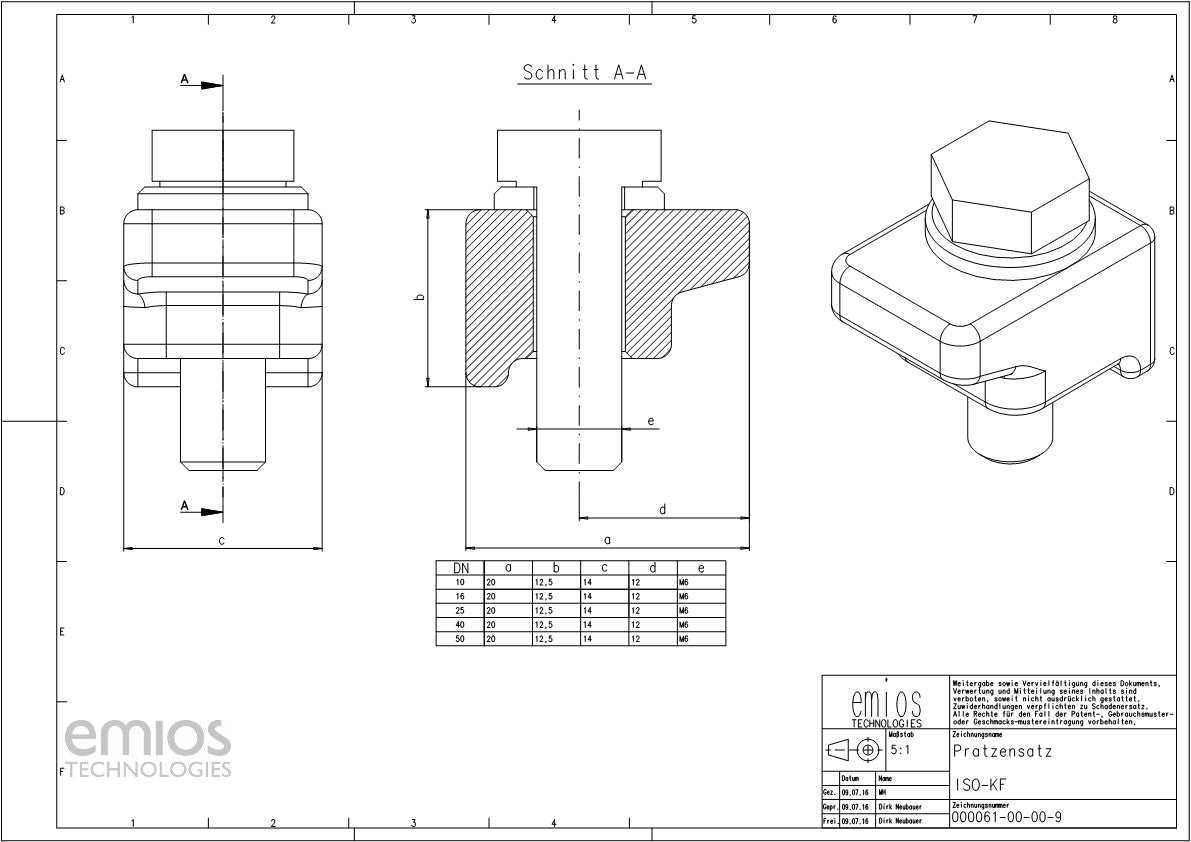
The claw clamp engages the outer edge of the KF flange and is secured to a suitable mounting surface using an appropriate fastening screw.
Multiple claw clamps may be required to distribute the clamping force evenly around the flange circumference. The required number and arrangement depend on the flange size and mounting configuration.
A compatible sealing element must be installed between the KF flange and the mating surface to establish a vacuum-tight connection.
For alternative mounting configurations, the KF Bulkhead Clamp is also available.
The achievable vacuum pressure and operating temperature depend on the complete flange assembly and the selected sealing components.